
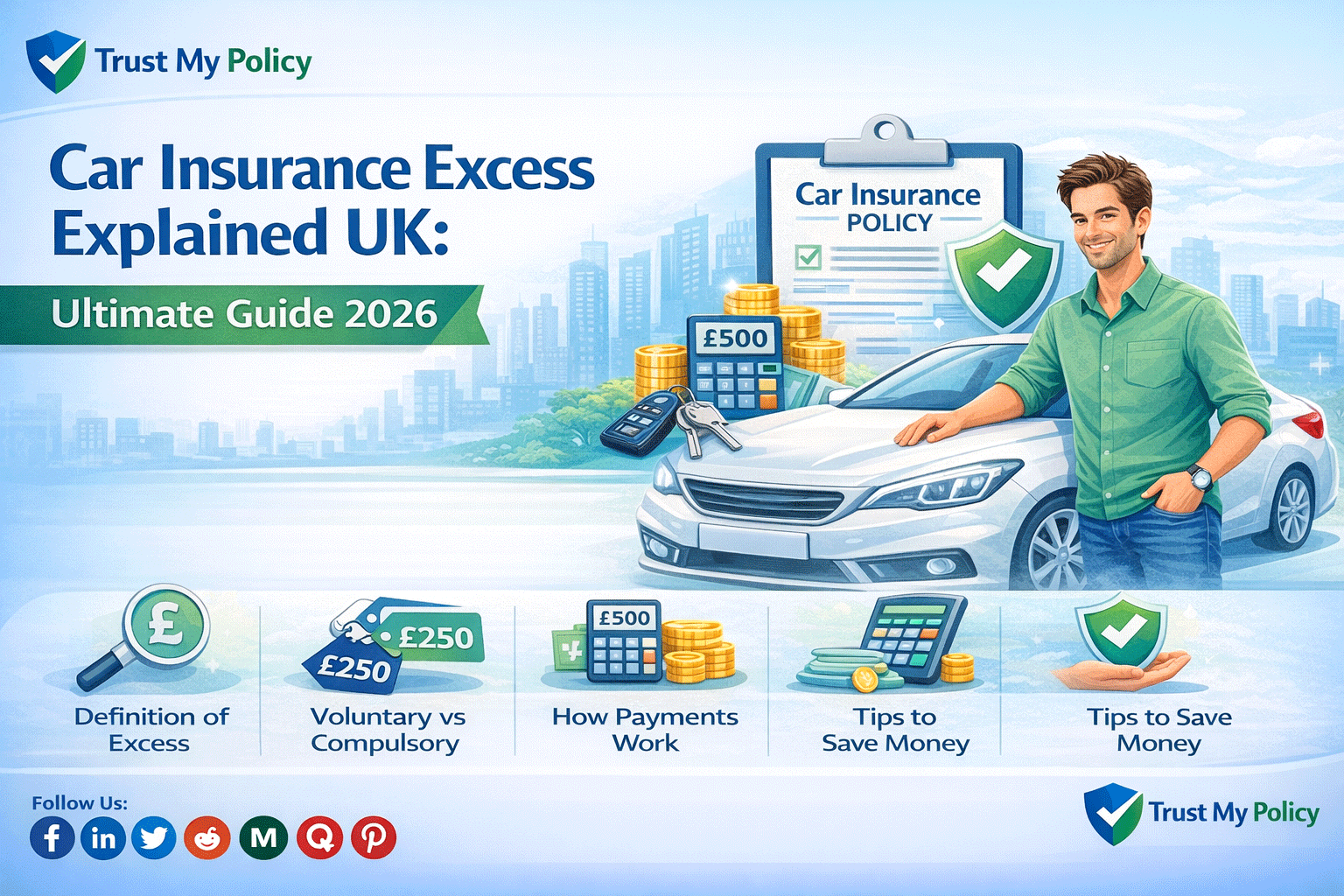
Most UK drivers discover what car insurance excess really means at the worst possible moment — when they’re standing next to a damaged car trying to file a claim. Here’s the short version: car insurance excess is the amount you pay first on any claim, before your insurer pays the rest. If your claim is £1,200 and your total excess is £500, your insurer pays £700. If your claim is £400 and your excess is £500, your insurer pays nothing — and you’ve lost your no-claims discount for the year.
Getting your excess wrong is one of the most expensive mistakes UK drivers make. This guide explains exactly how it works, how to choose the right amount, and the situations where you should — and shouldn’t — bother claiming at all.
This guide explains exactly how excess works, the difference between compulsory and voluntary excess, how much to choose, and how to avoid the most costly mistakes UK drivers make.
This is the question most UK drivers ask after an accident — and your excess is central to the answer. Before you call your insurer, run through this quick check:
Add your compulsory excess + voluntary excess. This is the minimum you’ll pay regardless of claim size.
Get a rough quote from a garage or use photos to estimate. If the repair cost is close to or below your total excess, claiming makes no financial sense.
A claim typically removes 2–5 years of no-claims discount. If you have 5 years of NCD, that could be worth £200–£400 off your premium every year. A claim that saves you £300 today might cost you £600 over the next two renewals.
| Repair Cost | Total Excess | Insurer Pays | Worth Claiming? |
|---|---|---|---|
| £300 | £400 | £0 | ❌ No — pay yourself |
| £600 | £400 | £200 | ⚠️ Borderline — consider NCD impact |
| £1,500 | £400 | £1,100 | ✅ Yes — worth claiming |
| £5,000 | £600 | £4,400 | ✅ Always claim |
Car insurance excess is the fixed amount you contribute to the cost of a claim. Your insurer pays everything above that amount — up to your policy limit.
For example — if your total claim is £1,500 and your excess is £400, your insurer pays £1,100. You pay £400. The excess comes out of the claim settlement, not as a separate upfront payment in most cases.
Every UK car insurance policy has an excess. It is not optional — it is a core part of how car insurance works. According to the Association of British Insurers (ABI), the average car insurance excess in the UK sits between £100 and £500 depending on the driver, vehicle, and insurer. You can check current ABI guidance at abi.org.uk.
There are two types of excess on every UK car insurance policy. Understanding both is critical before you buy.
Compulsory excess is set by your insurer — you cannot change it. It is based on risk factors including your age, driving experience, and vehicle type.
Young drivers and new drivers typically face higher compulsory excess amounts. A 17-year-old driver may face compulsory excess of £500–£1,000 on some policies. An experienced driver over 30 may pay as little as £100–£200.
You have no control over compulsory excess. It is fixed at the point of purchase and stays the same throughout your policy term.
Voluntary excess is the additional amount you choose to pay on top of your compulsory excess. You set this yourself when buying your policy.
Choosing a higher voluntary excess lowers your monthly or annual premium. Choosing a lower voluntary excess raises your premium but reduces what you pay when you claim.
| Voluntary Excess | Effect on Premium | Effect on Claim Cost |
|---|---|---|
| £0 | Highest premium | Pay compulsory only |
| £100 | High premium | Pay compulsory + £100 |
| £250 | Medium premium | Pay compulsory + £250 |
| £500 | Lower premium | Pay compulsory + £500 |
| £1,000 | Lowest premium | Pay compulsory + £1,000 |
Your total excess is always compulsory excess + voluntary excess combined.
If your compulsory excess is £200 and your voluntary excess is £300 — your total excess is £500. This is what you pay on every claim.
Here are four realistic UK scenarios showing exactly what you’d pay — and whether it’s worth claiming.
Choosing the right excess is one of the most important financial decisions when buying car insurance in the UK. The Financial Conduct Authority (FCA) recommends understanding your policy terms fully before purchasing — full guidance is available at fca.org.uk.
The golden rule is simple — never set your total excess higher than you can comfortably afford to pay in an emergency.
If your total excess is £800 but you only have £200 in savings — you cannot cover a claim even if your car is written off. That is the most costly mistake UK drivers make with excess.
Use this framework to decide:
| Your Situation | Recommended Voluntary Excess |
|---|---|
| New driver, limited savings | £0–£100 |
| Experienced driver, some savings | £150–£250 |
| Experienced driver, good savings | £300–£500 |
| Low mileage, clean driving record | £500–£1,000 |
| Company car, employer covers excess | £500–£1,000 |
Always calculate your premium saving vs excess increase. If raising voluntary excess from £200 to £500 saves you £40 per year — it takes 7.5 years to break even if you make one claim. In that scenario, lower excess is the better financial choice.
No — excess does not apply to every type of claim. This surprises many UK drivers.
Excess DOES apply to:
Excess does NOT apply to:
In non-fault accidents, recovering your excess can take time — our insurance claims guide explains what to expect step by step.
Important note on non-fault accidents. Even if an accident is not your fault, most UK insurers require you to pay your excess upfront when you claim. You then recover it from the at-fault driver’s insurer — but this process can take weeks or months. For more on your rights in non-fault accidents visit GOV.UK.
These are two separate things that UK drivers often confuse.
| Excess | No-Claims Discount | |
|---|---|---|
| What it is | Amount you pay per claim | Discount earned for claim-free years |
| When it applies | Every time you claim | Builds up over years without claims |
| Effect of claiming | You pay the excess | You lose some or all of your discount |
| How to protect it | Raise voluntary excess | Add NCD protection to your policy |
| Typical value | £100–£1,000 | Up to 75% premium reduction after 5 years |
Both excess and no-claims discount affect the true cost of claiming. Before making any claim always calculate whether the payout exceeds both your excess AND the cost of losing your no-claims discount over the next 1–3 years.
For a deeper look at how the two types of car cover compare overall, see our guide to third-party vs comprehensive car insurance.
If your current excess feels too high, here are the most effective ways to reduce it:
1 — Reduce your voluntary excess at renewal. When your policy renews, simply choose a lower voluntary excess amount. Your premium will increase slightly but your financial exposure on claims reduces significantly.
2 — Shop around using comparison sites. Different insurers set different compulsory excess levels. Comparing on MoneySupermarket, Go Compare, and Compare the Market often finds policies with lower compulsory excess at similar premiums.
3 — Add excess protection insurance. Excess protection is a separate low-cost add-on — typically £25–£60 per year — that reimburses your excess after any claim. It effectively reduces your out-of-pocket cost to zero on valid claims.
4 — Improve your risk profile. Completing an advanced driving course such as Pass Plus or IAM RoadSmart can reduce both your premium and compulsory excess on some policies.
5 — Choose a lower-risk vehicle. Cars in lower insurance groups attract lower compulsory excess. Switching from a high-performance vehicle to a standard family car can dramatically reduce both your premium and excess level.
Choosing a higher voluntary excess to lower your premium is a balancing act — understanding the difference between premium and deductible helps you make the right call.”
These are the most common — and most expensive — errors UK drivers make when it comes to excess:
Car insurance excess is the amount you pay towards a claim before your insurer covers the rest. Every UK policy has a compulsory excess (set by your insurer, non-negotiable) and an optional voluntary excess you choose yourself. Your total excess is both combined — and it applies every time you make a claim.
According to the Association of British Insurers (ABI), the average total car insurance excess in the UK is between £200 and £500, depending on the driver’s age, vehicle type, and insurer. Young and new drivers typically face compulsory excess of £500–£1,000, while experienced drivers over 30 may have compulsory excess as low as £100–£200.
If the repair cost is lower than or equal to your total excess, your insurer pays nothing. In this case, do not make a claim. Pay out of pocket, don’t notify your insurer, and your no-claims discount stays intact. A claim where the payout is £0 still goes on your record and can increase future premiums.
Neither is universally better. A higher excess lowers your premium but means you pay more when you claim. A lower excess raises your premium but reduces financial risk. The key rule: never set your total excess higher than the cash you can access immediately in an emergency.
In most cases, yes — you still pay your excess upfront even in a non-fault accident. Your insurer then recovers it from the at-fault driver’s insurer, which takes 4–8 weeks. Some policies include a non-fault excess waiver — check your documents carefully.
Usually not. Windscreen and glass claims are typically treated separately on most UK policies and have their own lower excess (often £75–£100). A cracked windscreen is nearly always worth claiming on. Confirm with your insurer before paying out of pocket.
You can usually change your voluntary excess only at renewal. Mid-policy changes may involve an admin fee. Your compulsory excess cannot be changed — it is fixed by your insurer for the full policy year.
Excess protection is a separate add-on (typically £25–£60 per year) that reimburses your excess after a valid claim. It is worth considering if you have a high total excess of £500 or more and limited savings to cover it immediately.
Yes. Filing a claim affects your renewal premium by removing no-claims discount and adding a claim to your record for 3–5 years. Minor claims are often best paid out of pocket to protect both your NCD and your future premium.
Compare three figures: the repair cost, your total excess, and the value of the no-claims discount you would lose. If the insurer’s payout (repair cost minus excess) is less than the NCD value you’d lose over the next 2 years, pay for the repair yourself.
Car insurance excess doesn’t need to be complicated. Here’s what matters:
If you’re reviewing your policy at renewal, also check how your excess compares to our guide on third-party vs comprehensive car insurance — choosing the right cover type is just as important as setting the right excess level.
This article is for informational purposes only. Always review your specific policy documents and consult a licensed insurance professional before making coverage decisions. TrustMyPolicy.com does not sell insurance products or represent any insurer.

Jagadeesh Gutha is the founder of TrustMyPolicy.com, an independent insurance information platform covering life, health, car, home, and business insurance for US and UK readers. He researches insurance products, policy structures, and consumer rights to help everyday people make informed coverage decisions without the jargon. All content on TrustMyPolicy is independently researched, fact-checked, and written to educate — not to sell.



Insurance Guides for UK, USA & Worldwide We are not an insurer or broker.


Reader Comments (0)